

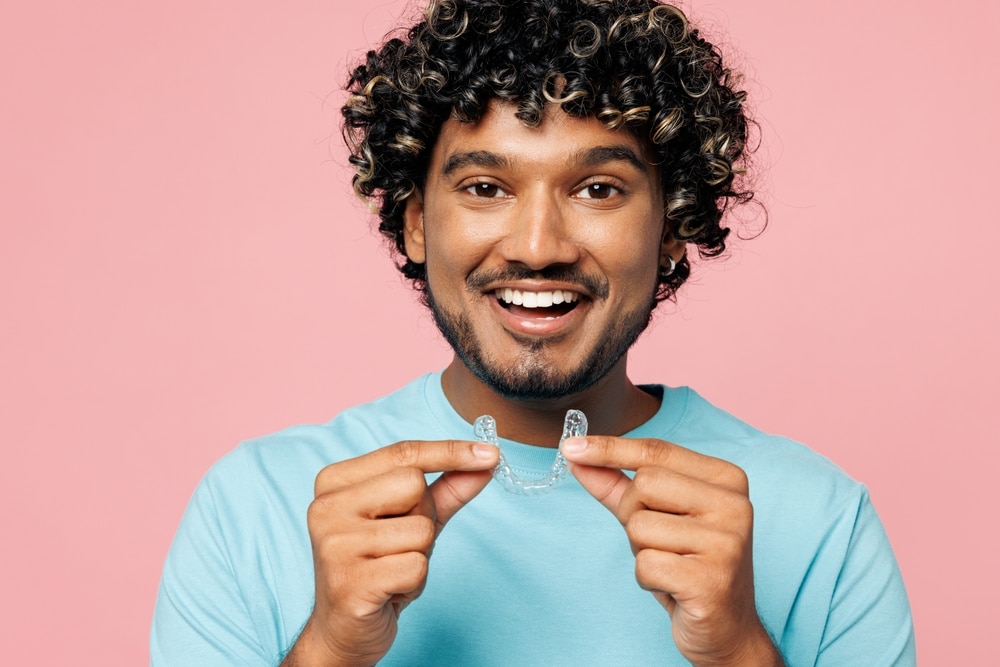
Seeing your smile improve with clear aligners can feel slow at first, but knowing when to expect real changes helps you stay motivated. Many patients wonder how long does the average Invisalign treatment take to show noticeable results, and the answer depends on both biology and behavior. In this guide, you’ll discover the typical timeline for subtle shifts, visible progress, and full transformation, explore the factors that influence speed, understand realistic expectations for different case types, learn what to do if progress stalls, and prepare for lasting retention. Along the way, you’ll see why choosing Orthodontic Associates for your clear aligner journey ensures comfort, predictability, and expert support.
When Will You Start Seeing Noticeable Invisalign Results?
Invisalign treatment gradually moves your teeth by applying gentle, continuous pressure through a series of custom aligners. This mechanism supports healthy tooth movement and enhances smile aesthetics over time. Early signs emerge in weeks, while more striking improvements unfold in months.
What Are the Initial Changes in the First Few Weeks of Invisalign?
Your first aligners introduce light force that stimulates bone remodeling around each tooth. Bone cells respond to pressure by resorbing and depositing mineral, allowing tiny shifts.
- You may feel mild pressure or soreness as teeth begin to tilt and rotate.
- Subtle gaps can widen or narrow slightly in front teeth during alignment.
- Soft tissue around teeth adapts, causing minor changes in tooth position.
- Some patients notice aligners fitting differently as movement occurs.
These early shifts set the stage for more visible improvements in the coming months.
How Visible Are Invisalign Results After 1 to 3 Months?
Between one and three months, your smile displays clear evidence of progress as minor gaps close and front teeth straighten.
- Gap closure: Spaces under 2 mm often eliminate within this window.
- Alignment of incisors: Front teeth begin to appear more uniform in angle.
- Bite contacts: You might sense improved alignment when biting or chewing.
- Confidence boost: Initial changes often prompt compliments, motivating continued wear.
These developments confirm that the aligners are guiding your teeth toward their planned positions and prepare you for more significant transformations ahead.
What Significant Transformations Occur Between 6 and 12 Months?
By six to twelve months, Invisalign advances from minor tweaks to major alignment improvements. Treatment mechanisms include attachments and elastic features that refine root positioning and bite correction.
- Crowded teeth: Overlapping teeth become distinctly separated and leveled.
- Overbite and underbite adjustments: Jaw relations move into healthier occlusion.
- Arch form: Your dental arch broadens or narrows to achieve balanced symmetry.
- Smile aesthetics: Lip support improves as teeth reach their final angulation.
These pronounced changes illustrate how sustained pressure and periodic refinements combine to deliver a truly transformed smile.
When Can You Expect Full Results After 12 to 18+ Months?
Full treatment completion typically occurs between twelve and eighteen months, although complex cases may extend to twenty-four months. At this stage, your aligners finalize root positioning and detail work:
- Final tooth contacts lock into optimal occlusion for chewing efficiency.
- Minor tooth rotations are polished to achieve uniform angles.
- Soft tissue around teeth matures around the new positions for stability.
- You transition into the retention phase to preserve results long-term.
Comparing treatment lengths by complexity shows how simple corrections wrap up faster, while severe bite issues require extended detailing.
What Factors Influence the Timeline for Invisalign Results?
Several key variables determine how quickly you’ll notice progress with clear aligners. Each factor adjusts treatment dynamics by modifying force application, biological response, or aligner effectiveness.
| Factor | Impact on Duration | Example |
|---|---|---|
| Case Complexity | More severe issues need longer remodeling cycles | Severe crowding can take 18–24 months |
| Patient Compliance | Wear time below 20 hours/day prolongs all stages | Skipping nights adds weeks per missed wear |
| Age | Younger bone remodels faster; adults adapt in denser bone | Teens may finish 6 months sooner |
| Attachments & Refinements | Extra procedures can extend detailing phases | Mid-treatment refinement adds 1–3 months |
How Does Case Complexity Affect Invisalign Treatment Duration?
Mild cases involving small spaces or minor rotations usually resolve in six to nine months. Moderate crowding or bite issues often need nine to twelve months of aligner wear. Severe misalignments or jaw discrepancies can extend treatment to eighteen months or more. Each level demands specific force vectors, attachment types, and refinement stages to achieve precision.
Why Is Patient Compliance Crucial for Faster Invisalign Results?
Aligners must be worn at least 20 to 22 hours per day to maintain continuous force on teeth. Consistent wear:
- Prevents reversal of progress.
- Aligns with planned staging built into 3D treatment models.
- Reduces the need for extra refinement trays.
Smith, J., Journal of Clinical Orthodontics (2022)
This citation reinforces the importance of patient adherence to the treatment plan, as highlighted in the article.
Tracking wear time with apps or simple charts can improve adherence and shave weeks off overall treatment.
How Does Age Impact Invisalign Treatment Time for Adults vs. Teens?
Younger patients often experience faster movement because bone remodeling rates are higher during adolescence. Adults have denser jawbone, which can slow tooth transition by a few weeks to months. However, adult compliance tends to be better, often balancing out the slower biological response through diligent aligner wear.
What Role Do Attachments and Refinements Play in Treatment Length?
Attachments are tooth-colored bumps bonded to teeth to direct force more precisely. They enhance movement in complex directions but require additional aligner designs. Refinements occur when initial aligners achieve most goals but minor adjustments remain. Each refinement phase adds one to three months of treatment to perfect details.
What Is the Average Invisalign Treatment Length for Different Cases?
Duration varies by the type and severity of the issue being corrected. The following table outlines typical treatment lengths for common case types:
| Invisalign Plan | Case Type | Expected Duration |
|---|---|---|
| Invisalign Express | Minor rotations, small gaps | 3–6 months |
| Comprehensive Invisalign | Moderate crowding or spacing | 9–12 months |
| Invisalign Teen | Adolescent bite adjustments | 12–18 months |
| Complex Correction | Severe crowding, bite issues | 18–24 months |
Invisalign Treatment Timeline
The duration of Invisalign treatment varies depending on the complexity of the case, with minor corrections potentially taking 3-6 months and more complex cases requiring 18-24 months. Factors such as patient compliance, age, and the use of attachments and refinements also influence the overall treatment time.
American Association of Orthodontists, Invisalign Treatment Guidelines (2023)
This information supports the article’s discussion of the factors that affect the length of Invisalign treatment.
This comparison clarifies how selecting the right treatment plan aligns with your specific orthodontic needs and timing expectations.
How Long Does Invisalign Express Take for Minor Corrections?
Invisalign Express uses a reduced number of aligners for patients needing minimal movement—typically under five millimeters of change. Most cases complete in three to six months, offering a swift route to a more aligned smile.
What Are Typical Timelines for Correcting Gaps, Crowding, and Overbites?
- Gap closure under 2 mm: 3–4 months
- Moderate crowding: 9–12 months
- Overbite/underbite correction: 12–18 months
These ranges depend on individual anatomy and compliance but provide a reliable framework for planning your journey.
How Does Invisalign Compare to Braces in Treatment Speed and Results?
Invisalign often matches or exceeds braces in speed for mild to moderate cases due to digital planning and predictable force application. Traditional braces may edge out in extremely complex bite corrections, but clear aligners deliver comparable final outcomes with greater comfort and discretion.
How Can You Set Realistic Expectations for Your Invisalign Journey?
Establishing clear goals and understanding variability fosters confidence and reduces anxiety during treatment. Recognizing that individual response shapes progress prepares you for each phase.
Why Do Individual Results Vary During Invisalign Treatment?
Biological factors—such as bone density, periodontal health, and genetic remodeling rates—affect how quickly teeth respond. Behavioral elements like diet, aligner cleaning habits, and consistent wear also contribute. Together, these variables explain why two patients with similar cases may progress at different paces.
How Important Are Regular Orthodontic Check-Ups for Progress?
Scheduled visits every 6–10 weeks allow your orthodontist to monitor movement, verify aligner fit, and order refinements as needed. These checkpoints ensure treatment stays on track and help catch minor deviations before they impact overall timing.
What Are Common Patient Concerns About Invisalign Progress?
Patients often worry their trays aren’t working if they don’t see immediate change, or they may feel discomfort signals problems. Rest assured, mild soreness indicates effective force, and aligner fit evolves naturally as teeth shift. Consistent wear and open communication with your orthodontist prevent misalignment fears.
What Should You Do If You’re Not Seeing Expected Invisalign Results?
Addressing stalled progress early preserves timeline accuracy and minimizes additional phases. Clear steps ensure you and your orthodontist can refine treatment together.
When Is It Time to Contact Your Orthodontist About Invisalign Progress?
If aligners feel loose after the first few sets, if you experience persistent fit issues, or if no visible change appears after two months of correct wear, reach out promptly. Early evaluation allows minor tweaks before major delays occur.
What Are Common Reasons for Delayed or No Visible Results?
- Inadequate wear time (below 20 hours/day)
- Misplaced or lost aligners reducing continuous force
- Attachment loss affecting targeted movements
- Biologically slower response requiring extended remodeling
How Can Treatment Be Adjusted to Improve Results?
Orthodontists may recommend refinement trays, re-bond attachments, or adjust wear protocols. In some cases, supplemental techniques—like elastics or in-practice tooth trims—boost movement in stubborn areas. These adjustments enhance predictability and help you regain momentum.
How Do You Maintain Your New Smile After Invisalign Treatment?
Completion of aligner therapy marks the start of retention, a phase crucial for preventing relapse and securing your investment in a straight smile.
Why Is the Retention Phase Critical After Invisalign?
Teeth naturally drift toward their original positions without ongoing support. Retainers maintain the new alignment while soft tissues and bone stabilize around the teeth, ensuring lasting results and protecting your long-term oral health.
What Are Best Practices for Wearing Retainers and Maintaining Alignment?
- Wear retainers full-time for the first 3–6 months, then nightly thereafter.
- Store retainers in a protective case to avoid distortion.
- Clean retainers daily with gentle, nonabrasive solutions.
- Attend periodic check-ups to confirm retainer fit and effectiveness.
These habits support a permanent, confident smile long after your aligner journey ends.
Why Choose Orthodontic Associates for Your Invisalign Treatment?
Selecting an experienced practice ensures you benefit from advanced planning, personalized care, and reliable support at every stage.
What Makes Our Invisalign Treatment Comfortable and Discreet?
Our patients enjoy virtually invisible aligners crafted from SmartTrack material, designed for optimal comfort and efficient movement. With no metal brackets or wires, you can smile confidently throughout treatment.
How Do We Ensure Predictable and Timely Invisalign Results?
We leverage 3D digital treatment models and proprietary planning protocols to map each tooth’s journey. Regular monitoring and data-driven refinements minimize surprises and keep your timeline on target.
What Do Our Patients Say About Their Invisalign Results Timeline?
Many of our patients begin noticing subtle improvements within weeks and celebrate major transformations by six months. Their testimonials highlight reduced treatment time compared to traditional braces and exceptional satisfaction with the speed of visible change.
Every smile deserves clear direction and expert care. If you’re ready to discover how soon you can see your own Invisalign progress, schedule a consultation with Orthodontic Associates today and take the first step toward a straighter, more confident smile.